Artefact 3: KoHD Cover
NOTE: This artefact will be covered in two parts to showcase the unique elements of recording and mixing respectively.
Part 1: Recording
Before we began the project we had to plan out which instruments/mics were required as well as which studios we wished to record in. We choose between SSL1, a “wet” room that comes with a lot of reverb, the Audient, a small studio that has a very “dry” sound, having little to no effect on any recordings that would be made there, and SSL2, a middle-ground between the two. We ultimately ended up choosing SSL2 for all of our instruments, and SSL1 for the vocals. We didn’t want too much or too little reverb when recording the track. Additionally having most of our project recorded in the same studio made it easier to get recordings done back to back, especially since the acoustic, electric and bass guitars were all performed by the same person.
Drums
To start off the project, we decided to record the drums first. This is common in the industry as it gives a foundation for the rest of the musicians to play over. It was also convenient as I was the one playing, meaning we didn’t have to wait on anyone as soon as the kit was set up. We used an Audix mic kit: an Audix D6 for the bass, i5 for the snare, and a pair of ADX-51s for the overhead mics. We used a Glyn Johns method of recording the kit, ensuring both overheads were equidistant from each other to not cause issues with the stereo image.

Bass Guitar
Next up we recorded the bass guitar. For this we decided to use a D.I. box as well as an AKG D112 for recording the amp. The bass is generally the second instrument to record after the drums as it adds on nicely to the foundation of the track for the acoustic/electric guitarists.

Acoustic Guitar
After this we decided to record the acoustic guitar, for this we used a pair of ADX-51 mics to record the neck and body to create a stereo image. Condenser mics are generally preferred for recording acoustic guitar over dynamic mics due to their ability to capture a wide range of frequencies, something that acoustic guitar is particularly good at providing.

Electric Guitar
Next up we recorded the electric guitar, this was pretty much the same procedure we used from the bass except we used an SM57 along with a regular guitar amp rather than a bass one. Nothing too complicated.

Vocals
After the acoustic guitar, we moved on to the vocals. For this track we chose to record separate takes of the vocalist singing in low/high pitch to enhance the overall emotion felt when listening. We first attempted to get the vocals recorded using a Rode NT1 and a Pop shield. However, we decided weren’t happy with our original takes sounded, and re-recorded them using a Neumann TLM103, also equipped with a pop shield, which aligned much more with what we wanted quality-wise.

Backing Vocals/Hums
The backing vocals (done by a separate singer) and hums were done straight after the initial recording of the vocals using the NT1, and therefore used the same setup. Since these elements of the song aren’t on the forefront of the listening experience, the effect the original setup had on their quality was negligible, and we agreed there was no need for additional retakes.
Part 2: Mixing
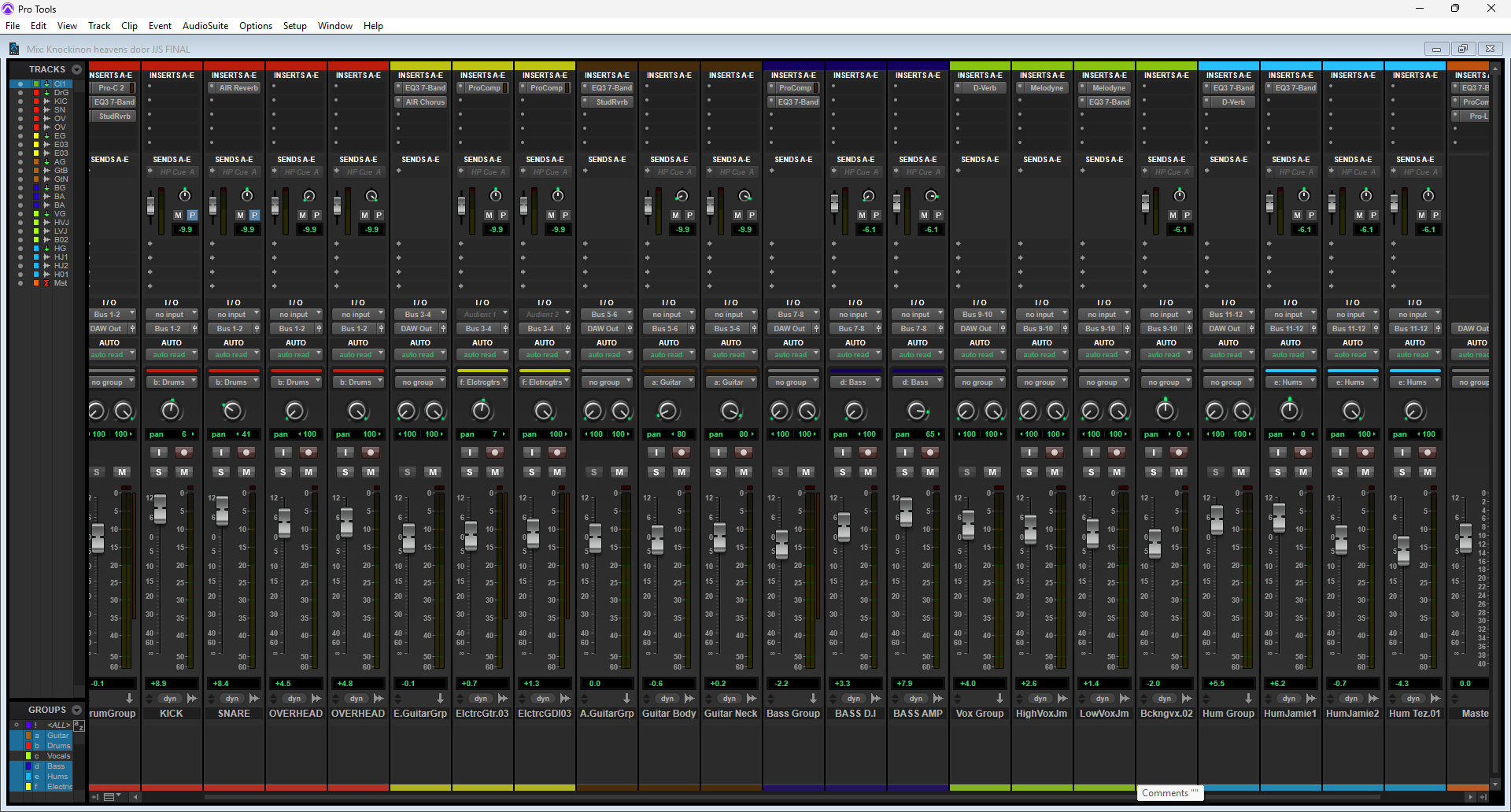
The care we took during the recording process, combined with the overall vibe/genre of the original song, meant for a relatively easy time mixing. I didn’t need to try and fix the song with effects in any way because our recordings already sounded good, making me able to focus my time into enhancing what I already had.
Drums
For the drums I used compression to bring down the transients, as well as an EQ to make them sound the way I wanted to. I added a little reverb to the group to help the drums sit better, but I added another reverb to the snare to help it stick out more. I also rearranged where the crashes played because I found out after recording I played them a bar too early.


Bass
I added compression to the bass group track as I thought it could do with getting pushed down a little, as well as adding EQ to enhance the overall sound.


Acoustic Guitar
I added EQ to the acoustic guitar group track as well as reverb to make it blend better with the overall track.


Electric Guitar
Along with EQ and compression, I decided to add chorus to the guitar to give it a dreamy vibe. There is a part of the mix where I removed the electric guitar as well as the low vocals to spice the overall song up a bit with a different section.


Vocals
For the vocals we had reverb on the group track to add more emotion to the song. As well as this, I noticed the low track was very bass-heavy and used EQ to adjust accordingly. I also used melodyne to enhance the tone of both tracks but decided not to include screenshots as its very hard to capture any work done with it in my opinion.


Hums
The hums were basically the same deal as the vocals, EQ and reverb to enhance the tone along with reduction of bass frequencies in the lower pitch take.


Backing Vocals
The backing vocals were left dry
Create Your Own Website With Webador